

Introduction: Why köpa testosteron continues to attract attention The phrase köpa testosteron reflects a growing…
ALL
Introduction to Top Rated Bandar Togel Online In the fast-growing digital lottery industry, players constantly…
In today’s digital gaming environment, speed and security must work together. Players expect instant access…

Gojo Satoru: The Sorcerer Beyond Limits

Introduction
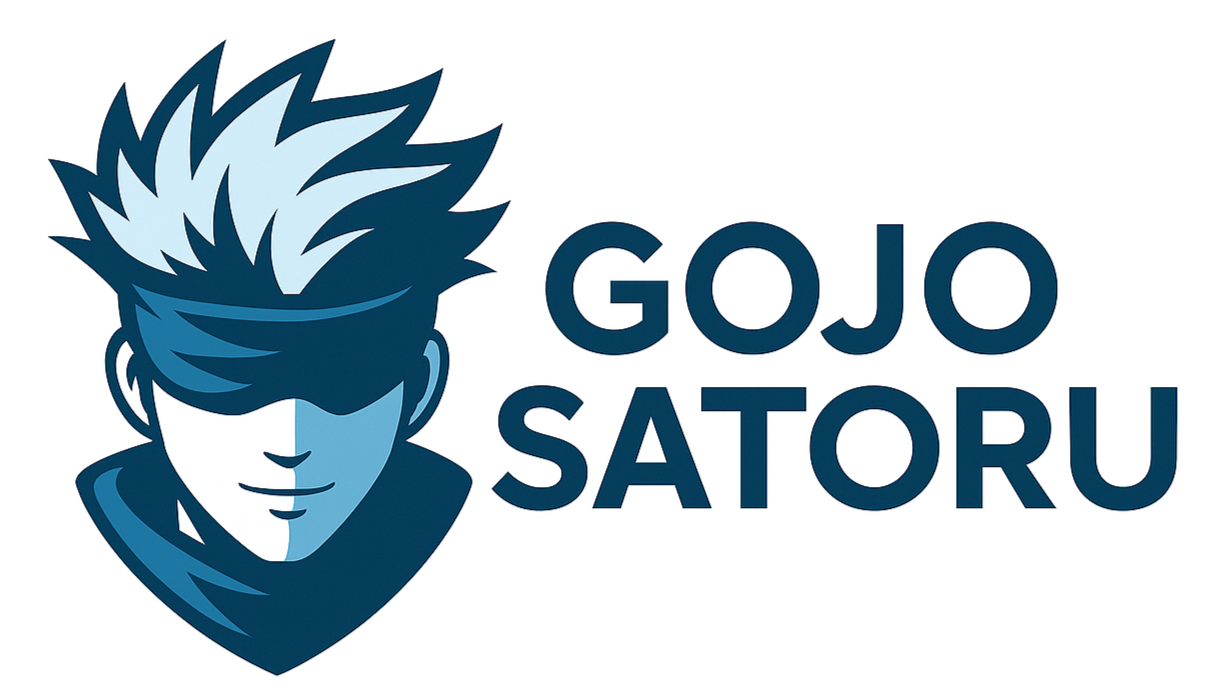
In the realm of Japanese anime and manga, few characters have achieved the kind of instant recognition and lasting cultural impact as Gojo Satoru, the enigmatic sorcerer from Jujutsu Kaisen. Created by Gege Akutami, Gojo stands as a perfect storm of charisma, power, and philosophical intrigue. His striking design — white hair, blindfolded eyes, and an effortless smirk — instantly captures attention, while his layered personality keeps fans and critics alike dissecting his every move.
Gojo Satoru is not merely a strong character; he is a redefinition of the mentor archetype, a living embodiment of limitless potential restrained by moral responsibility and societal decay. Through his presence, Jujutsu Kaisen examines the intersections of power, isolation, and the burden of genius — themes that echo across myth, literature, and psychology.
This article delves into every facet of Gojo Satoru: his origins, powers, ideology, relationships, symbolism, and the profound influence he has had on the anime landscape.
- The Origins of Gojo Satoru
Gojo Satoru was introduced early in Jujutsu Kaisen as a teacher at Tokyo Jujutsu High, a training ground for sorcerers who combat curses — malevolent manifestations of human emotion. Born on December 7, 1989, Gojo belongs to the Gojo Clan, one of the three great families in the world of Jujutsu. His lineage is particularly special because he inherited both the Limitless technique and the Six Eyes, making him the first in four hundred years to do so.
These inherited powers set him apart from birth, effectively crowning him as the most powerful jujutsu sorcerer alive. From the moment of his birth, the balance of power in the world of curses shifted — a statement that underlines his almost divine narrative function in the story.
Gege Akutami has often stated that Gojo was designed to represent the idea of “a person too powerful for their own era.” In this way, Gojo functions not only as a character but also as a thematic fulcrum around which Jujutsu Kaisen revolves.
- Visual Design and Symbolism
Gojo’s design is iconic — the stark contrast of white hair, blindfold, and black uniform immediately sets him apart from the rest of the cast. Every detail serves a symbolic function.
- White Hair: Traditionally in Japanese media, white hair represents wisdom, otherworldliness, or supernatural power. For Gojo, it underscores his detachment from ordinary humanity and his ethereal, almost godlike nature.
- Blindfold / Sunglasses: The covering of his eyes is not just aesthetic; it is a metaphor for his restraint. His Six Eyes grant him unimaginable perception, allowing him to see cursed energy in microscopic detail. By covering them, Gojo limits his power — a symbolic act of self-control. It mirrors ancient mythological figures who blindfolded themselves to contain divine sight, such as Tiresias in Greek mythology.
- Black Uniform: His minimalist outfit reflects a kind of purity and focus, stripping away distraction. It contrasts sharply with his flamboyant personality, representing the duality between formality and freedom within him.
In essence, Gojo’s design visually communicates what he is: a being of extremes, balancing cosmic power and human eccentricity.
- The Nature of His Powers: Infinity and Six Eyes
At the heart of Gojo Satoru’s identity lies his Limitless technique, inherited from the Gojo Clan. It allows him to manipulate space at an atomic level, derived from mathematical concepts of infinity.
The Concept of Infinity
Gojo explains his power to his students using a simple thought experiment: when something approaches him, it never reaches him — it only gets infinitely closer. This principle, drawn from Zeno’s Paradox, illustrates the idea of approaching a limit that can never be reached. In battle, this means opponents’ attacks slow down as they near him, creating an invisible barrier of infinite space.
This is not merely a combat ability — it’s a philosophical metaphor. Gojo’s Infinity represents both his invincibility and his isolation. No one can touch him — literally and emotionally.
Six Eyes
The Six Eyes are an ocular jujutsu technique that grant Gojo immense perception and control over cursed energy. With them, he can see cursed energy flows in infinite detail, allowing for perfect manipulation. Moreover, the Six Eyes drastically reduce his energy consumption, meaning Gojo can sustain his Limitless techniques almost indefinitely.
Together, the Limitless and Six Eyes make Gojo an almost divine being — omniscient, omnipresent, and functionally immortal in combat. Yet, as Akutami subtly shows, such absolute power comes with psychological and social consequences.
- Gojo Satoru’s Philosophy
Despite his overwhelming power, Gojo is not a detached god. He is deeply philosophical, especially about change and morality. His ideology often centers around education and reform — he aims to create a new generation of sorcerers who can break free from the corrupt hierarchy that governs the jujutsu world.
In Gojo’s words:
“I want to reset this world of Jujutsu.”
He despises the old system, where elders and clans exploit the young, sacrificing them for political convenience. His decision to teach rather than dominate marks a conscious rebellion — he believes true progress comes not from authority, but from empowerment.
His mentorship of Yuji Itadori, Megumi Fushiguro, and Nobara Kugisaki is an embodiment of this belief. Through them, Gojo hopes to cultivate a future unshackled by tradition.
However, Gojo’s idealism is tinged with arrogance. He often underestimates how deeply entrenched human corruption is. His confidence borders on hubris — an echo of tragic heroes like Prometheus or Lucifer, who defied divine order only to suffer for their defiance.
- The Mentor Archetype Reinvented
Gojo Satoru stands as one of the most revolutionary mentor figures in shōnen storytelling. Traditional mentors — think Jiraiya (Naruto), Koro-sensei (Assassination Classroom), or All Might (My Hero Academia) — guide their students with humility and sacrifice. Gojo, by contrast, is brash, flamboyant, and unapologetically confident.
He doesn’t hide his superiority. When he tells Yuji,
“I’m the strongest,”
it’s not arrogance for arrogance’s sake. It’s a statement of fact — but also a reminder of the burden he carries. Gojo uses humor and swagger to mask the loneliness of his position. No one can truly relate to him, and that isolation defines his character more than any power could.
Moreover, his relationship with his students is both paternal and fraternal. He teases them, protects them, and pushes them beyond their limits, embodying a modern, emotionally intelligent teacher who believes in potential rather than obedience.
- Gojo and Geto: The Tragic Duality
Perhaps the most defining aspect of Gojo’s emotional arc is his relationship with Suguru Geto, his former best friend turned antagonist. Their story, explored in Jujutsu Kaisen 0 and the “Hidden Inventory” arc, is one of tragic duality — two men of genius, shaped by the same pain, choosing opposite paths.
While Gojo chose reform within the system, Geto chose revolution through destruction, seeking to eradicate non-sorcerers entirely. Their final confrontation is heartbreaking — Gojo kills his best friend, not out of hatred, but necessity.
Their relationship mirrors classic literary duos like Xavier and Magneto, Light and L, or even God and Satan — ideological opposites bound by mutual understanding. Geto’s fall breaks Gojo’s faith in humanity’s goodness, adding another layer to his detached demeanor. In killing Geto, Gojo also kills part of himself — the part that believed the world could be changed without bloodshed.
- Gojo’s Role in the Story
In Jujutsu Kaisen, Gojo operates on multiple narrative levels:
- The Guardian: He protects his students and the fragile balance between humans and curses.
The Rebel: He defies the Jujutsu elders, undermining their authority to protect his vision of a better world.
- The Catalyst: His existence escalates the stakes of the story — his sheer power forces both allies and enemies to evolve.
- The Martyr: When sealed in the Prison Realm, Gojo becomes a symbolic prisoner of his own ideals — a literal and metaphorical incarceration.
His absence from the story creates a vacuum that propels the younger generation forward, emphasizing one of Jujutsu Kaisen’s central themes: the inevitability of change.
- The Prison Realm: The Fall of the Strongest
The Shibuya Incident arc marks a turning point for Gojo and the series itself. Despite his overwhelming strength, Gojo is sealed within the Prison Realm by Kenjaku (the possessor of Geto’s body). This event carries deep symbolic weight. It demonstrates that even gods can fall — not through brute force, but through manipulation and collective strategy.
Thematically, it mirrors mythic narratives like the fall of Odin or the imprisonment of Lucifer — beings too powerful for the mortal world, confined by fear and necessity. Gojo’s sealing shifts the narrative’s focus from invincibility to vulnerability, both in the world and in his students’ hearts.
During his absence, the world descends into chaos — proof of how deeply his presence maintained order. His return later in the manga signifies rebirth and reckoning.
- Gojo’s Return and Final Duel with Sukuna
When Gojo returns from the Prison Realm, the world has changed. His re-emergence is akin to a mythic resurrection — the return of a deity to a corrupted world. Fans across the globe celebrated his return as one of the greatest moments in modern manga history.
His long-awaited battle with Ryomen Sukuna, the King of Curses, represents more than just a fight; it’s a clash of ideologies and existence. Both characters embody absolute power — Gojo, the pinnacle of humanity; Sukuna, the embodiment of cursed malevolence.
The duel showcases Gojo’s full arsenal — Infinity, Red, Blue, and the devastating Hollow Purple, a technique that erases matter itself. Despite his brilliance, Gojo ultimately meets his demise, not through weakness, but through the narrative necessity of passing the torch. His death serves as both a tragedy and a liberation — the end of an era, making way for new sorcerers to define their own limits.
- Psychological Depth and Symbolism
Beyond combat, Gojo is a profound study in isolation, perfection, and responsibility. Psychologically, he represents what philosopher Friedrich Nietzsche described as the Übermensch — a being who transcends morality and human limitation, yet remains lonely in his transcendence.
Gojo’s “Infinity” is both his strength and his curse. He can perceive and calculate everything, yet that very perception detaches him from ordinary emotion. In one poignant sense, he is trapped in a perfect loop — aware of every motion, every atom, every possibility — but unable to experience genuine unpredictability or intimacy.
He craves connection, yet his power makes it impossible. Thus, Gojo’s blindfold becomes more than a tool; it is a symbol of his desire to experience the world imperfectly — to feel, not just see.
- Cultural Impact and Fan Reception
Gojo Satoru has transcended his fictional universe to become a global icon. Within months of the anime’s release, he was among the most searched anime characters worldwide. His mix of power, wit, and aesthetic appeal has made him a cultural phenomenon across platforms like TikTok, Twitter, and Reddit.
Fan art, cosplay, and merchandise featuring Gojo dominate conventions and online communities. His charm has reached beyond anime fandom, influencing fashion (notably the blindfold aesthetic), memes, and even academic discussions about modern heroism in Japanese media.
Critics often praise Gojo for revitalizing the shōnen mentor archetype. Unlike many predecessors, he isn’t defined by tragedy or restraint alone — he embodies confidence without cruelty, wisdom without condescension, and flamboyance without shallowness. His very existence questions the moral simplicity that once defined shōnen storytelling.
- Gojo as a Modern Myth
In mythological terms, Gojo Satoru represents the god who walks among mortals. His story follows the archetypal hero’s journey in reverse — he begins at the peak of power and descends into humility, imprisonment, and eventual transcendence.
Like mythic figures such as Prometheus or Gilgamesh, Gojo’s tragedy stems from his desire to uplift humanity, even at the cost of divine punishment. He embodies the paradox of the infinite within the finite — a man who can control space yet cannot control fate.
Through him, Jujutsu Kaisen becomes more than a supernatural battle manga; it transforms into a meditation on the burden of greatness and the loneliness of perfection.
- Gojo’s Legacy
Even after his death, Gojo’s influence endures within the story and its fanbase. His teachings shape characters like Megumi Fushiguro, who inherits both Gojo’s ideals and burdens. His existence challenges the next generation to redefine strength — not as domination, but as compassion and conviction.
Gojo’s legacy is not his invincibility, but his belief in the future. He symbolizes the idea that even the strongest must fall for the world to grow. His death is not defeat but evolution — a narrative rebirth that ensures the continuation of his ideals through others.
- The Voice Behind the Legend
Gojo’s charm is also brought to life by his voice actors — Yuichi Nakamura in the Japanese version and Kaiji Tang in the English dub. Nakamura’s cool, teasing tone gives Gojo his iconic mix of authority and mischief, while Tang’s deep yet playful delivery brings the character a Western swagger that resonates with global audiences.
The synergy between visual design, writing, and voice acting turns Gojo into a multimedia phenomenon — one of the few anime characters who feel both mythical and modern.
- The Eternal Appeal of Gojo Satoru
Ultimately, Gojo Satoru’s appeal lies in his contradictions. He is playful yet profound, divine yet human, free yet bound. His story resonates with anyone who has felt the weight of expectation or the loneliness of standing apart.
In many ways, Gojo is the mirror of our modern age — a time obsessed with perfection, self-awareness, and power, yet starved for authenticity and connection. His Infinity is our digital barrier; his loneliness, our collective condition.
Through Gojo, Jujutsu Kaisen invites us to question not just what it means to be strong, but what it means to be human in a world that demands the infinite.
Conclusion
Gojo Satoru is more than a character — he is a myth reborn in modern ink. Through his strength, humor, and tragedy, he captures the eternal tension between limitlessness and loneliness, idealism and reality, divinity and humanity. His story is one of power’s paradox: that to transcend others is also to lose touch with them.
In his words, confidence, and even his downfall, Gojo reminds us that the true measure of greatness is not how untouchable one becomes, but how deeply one continues to care for a flawed world.
Whether sealed, slain, or remembered, Gojo Satoru remains — and will remain — the strongest.
Latest Posts
Introduction to Top Rated Bandar Togel Online In the fast-growing digital lottery industry, players constantly…
In today’s digital gaming environment, speed and security must work together. Players expect instant access…
Introduction to Zeusslot Casino Games Online casino gaming has become a favorite form of entertainment…
Garis4D Slot – The Ultimate 24/7 Online Casino Entertainment Experience The online gaming world continues…
Introduction to Tancap4D Slot Official Site The online gaming industry continues to expand, offering players…
Subscribe to Updates
Get the latest creative news from FooBar about art, design and business.